
Wet Molding to the Knife
Shaping damp veg-tan around the knife, so each sheath fits its own knife and no other.
Protect the knife
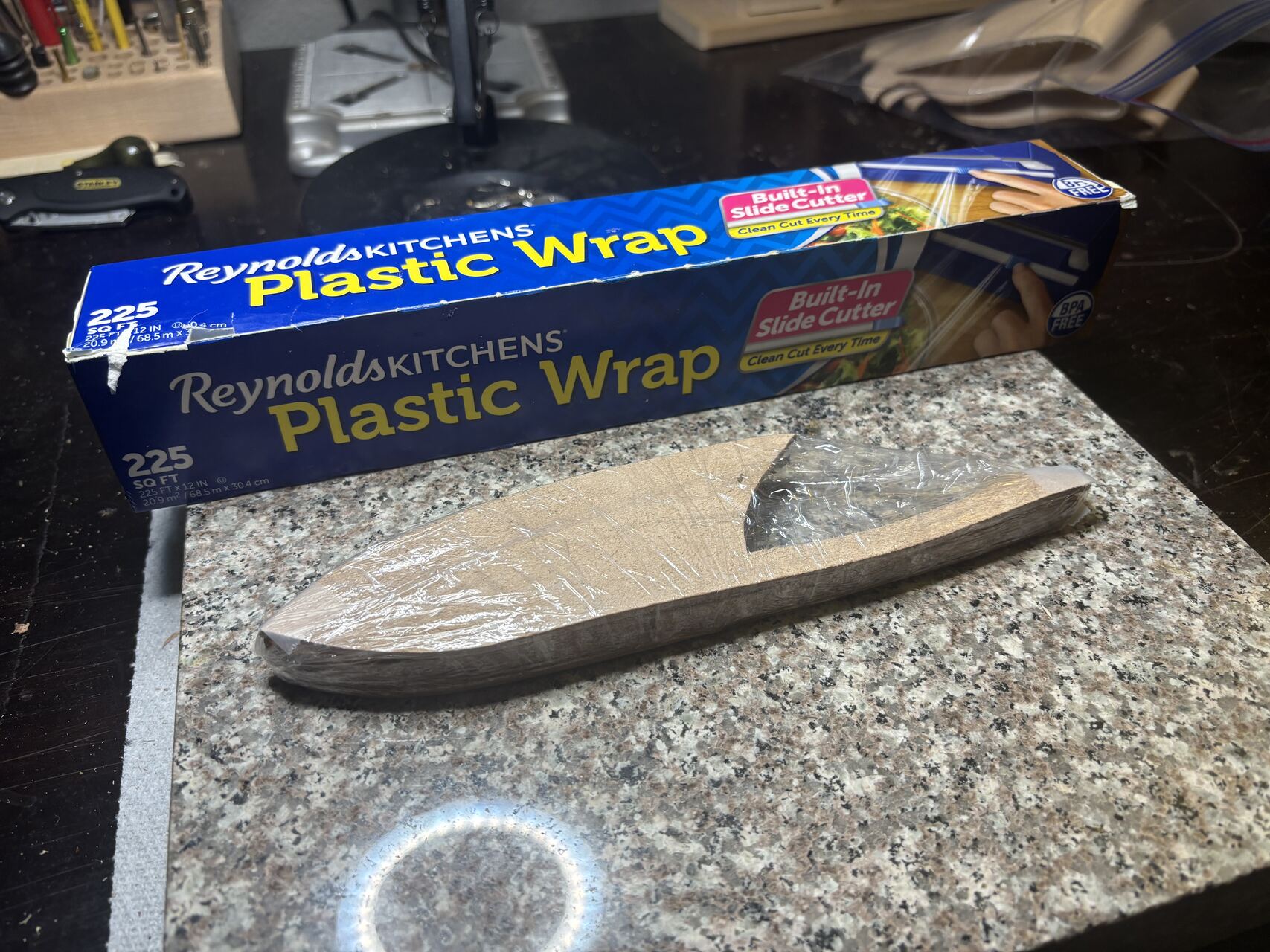
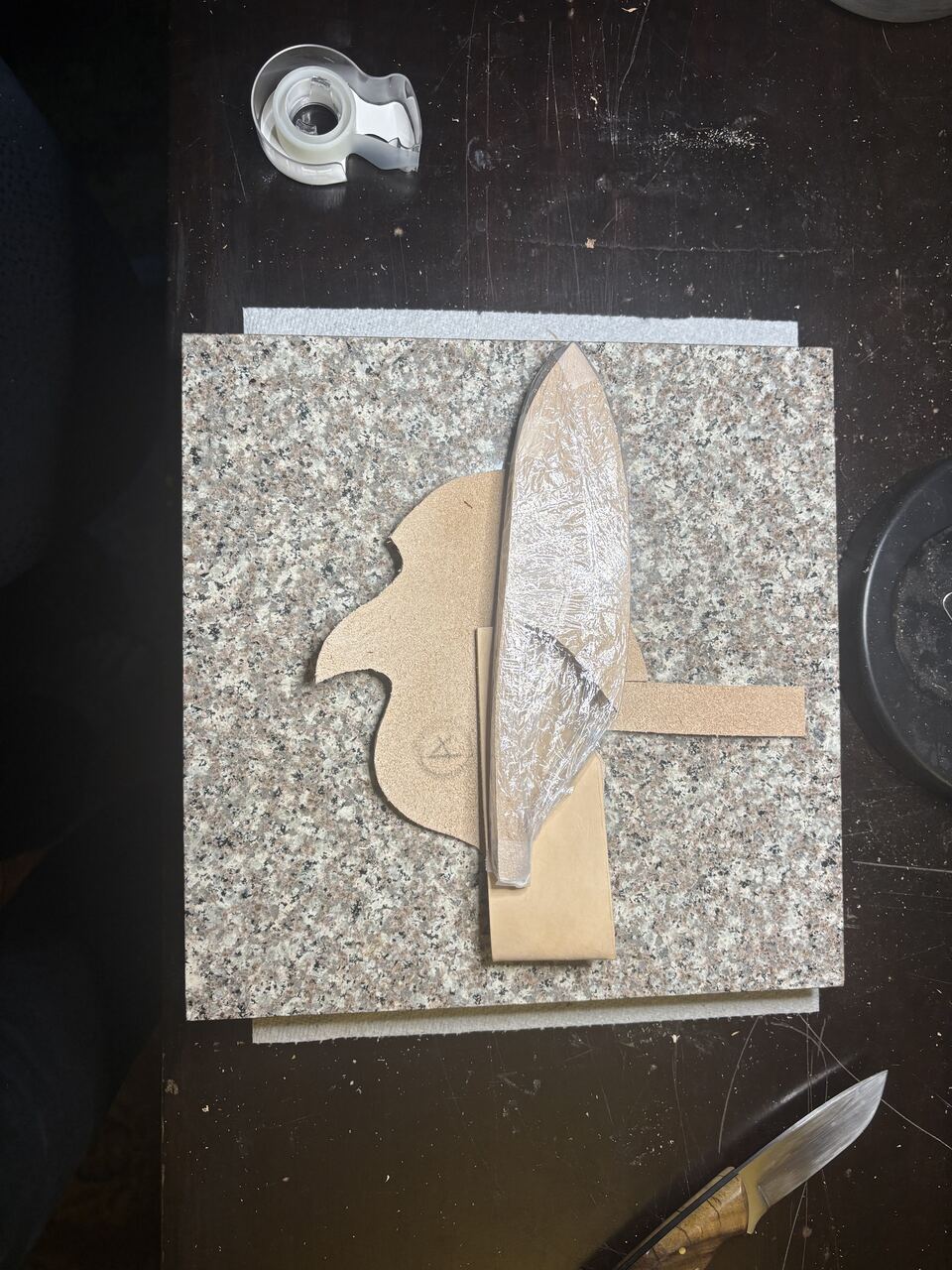
Wet leather against a high-carbon blade is a rust recipe, so the knife gets several layers of plastic wrap first. It also keeps the handle clean.
Mostly hands and thumbs
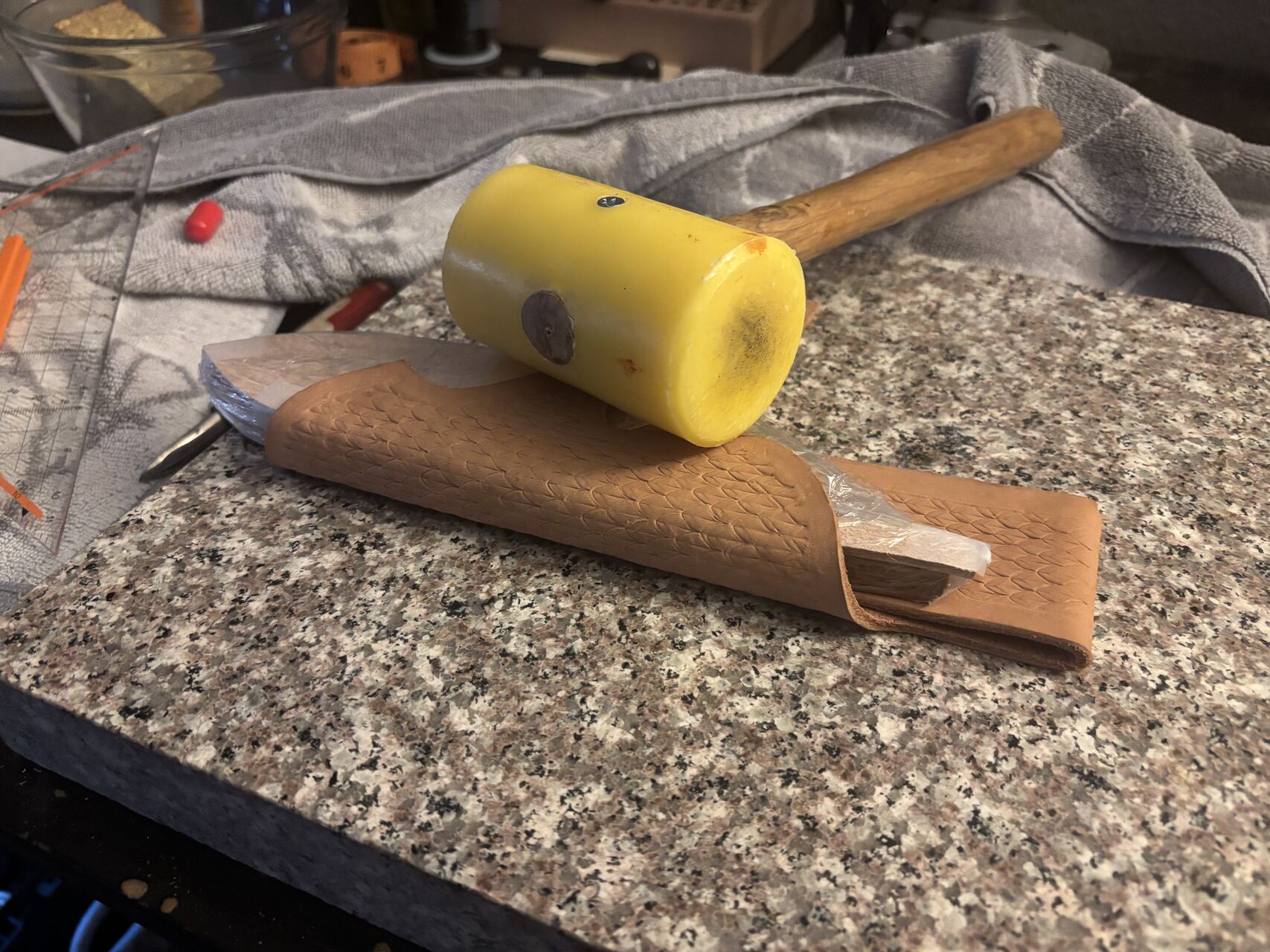
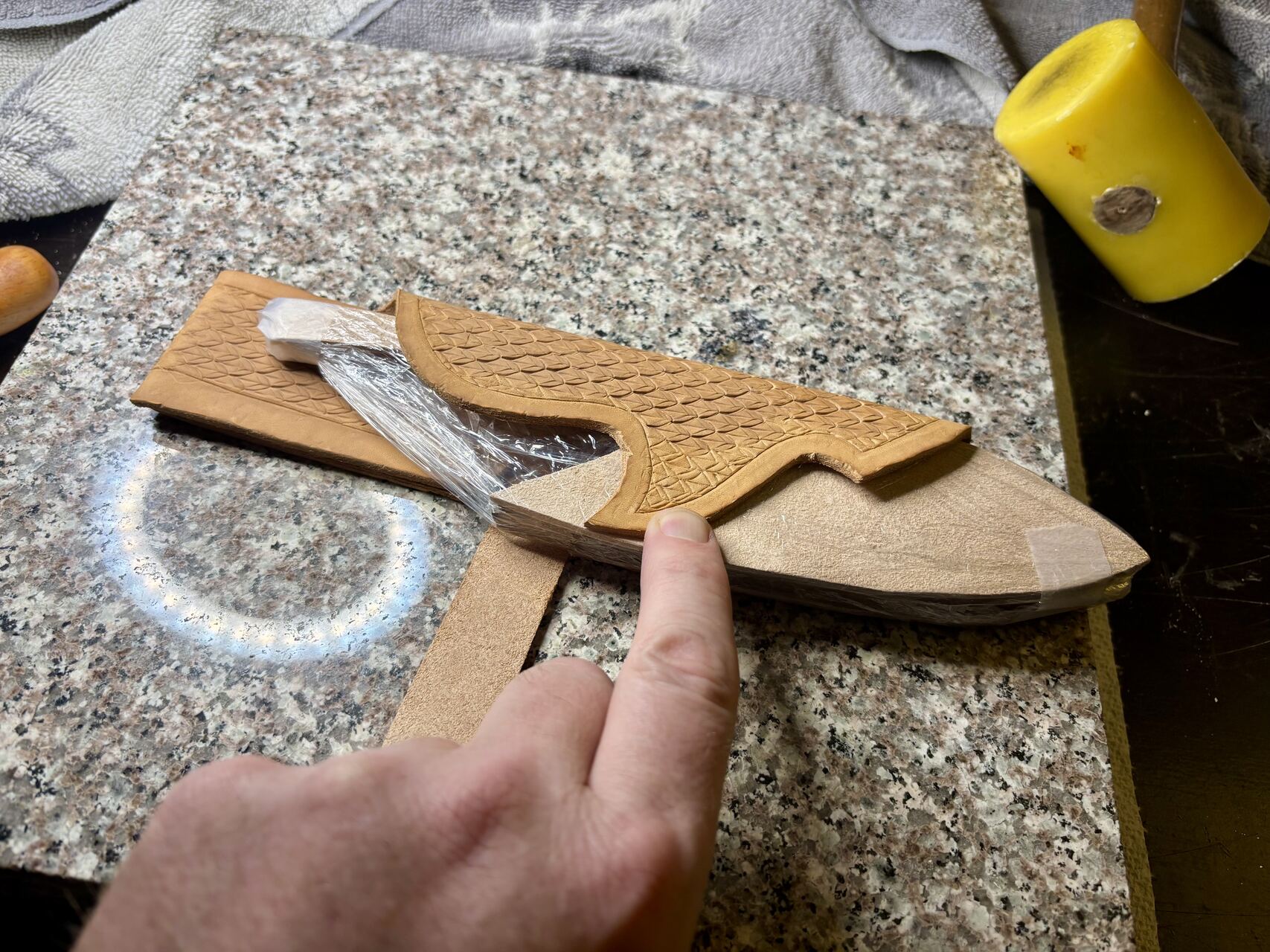
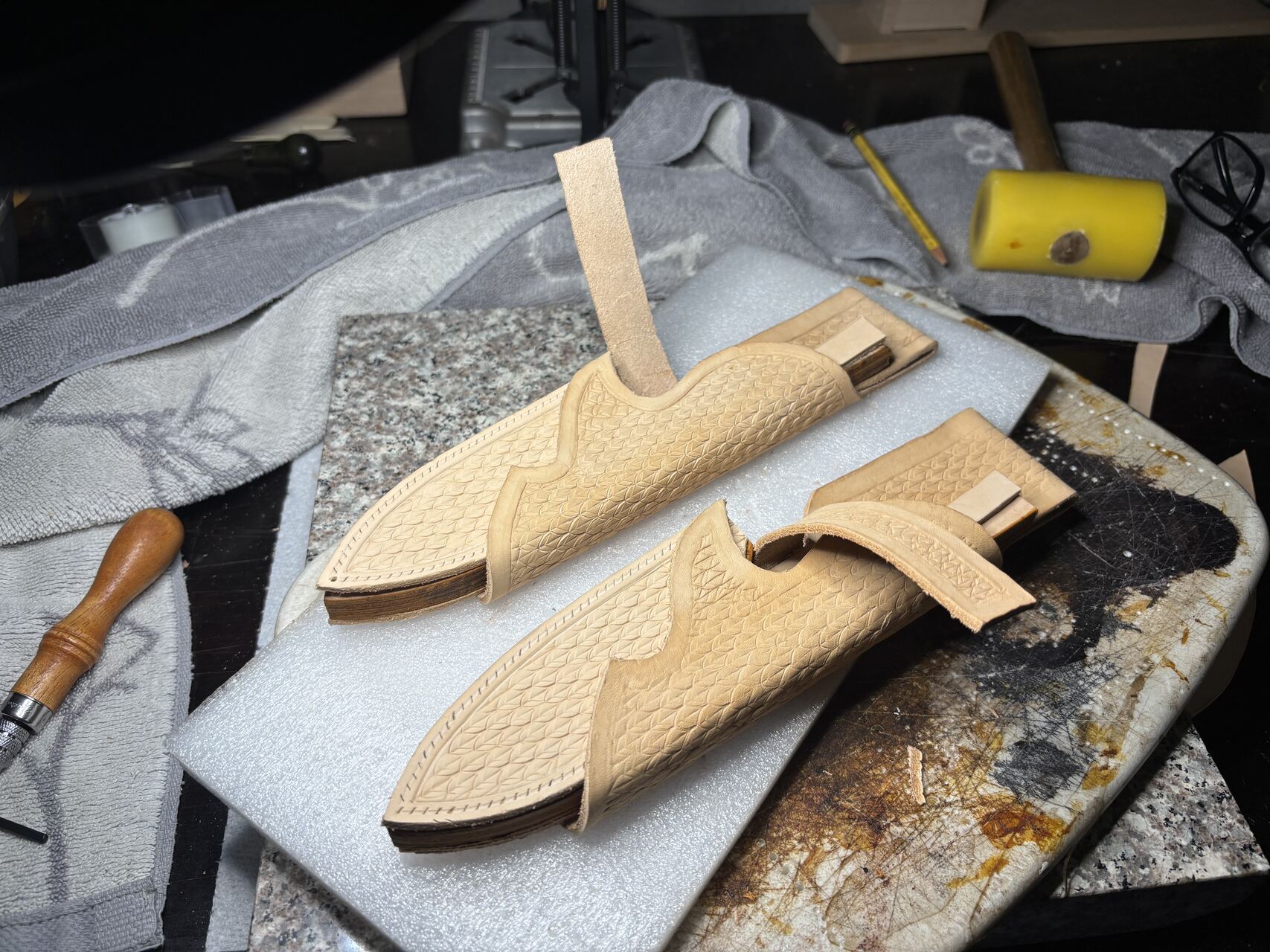
Dampen the veg-tan, wrap it around the knife and press the shape in. I did most of the forming by hand and thumb, and used a burnishing tool only sparingly. Then leave it to dry on the form. That's what makes it hold the shape.
For the outer wrapper this was the second forming: it had already been formed, marked, flattened and tooled (Step 7). Now it got dampened again and re-formed around the knife.
💬 A note on order of operations
There are many, many opinions on the right order for tooling, molding, dyeing, stitching and gluing, and on how to do each one. This is just what I did. I'm figuring most of this out by making things and learning from my mistakes, and I'll happily change my method when something works better.
🛠 Tips
- Wrap the knife in several layers. One layer tears.
- Damp, not soaked. Soaked leather loses its tooling.
- Let it dry completely on the knife before you take it off.