
Shellac
Bring out the grain and give the case a warm, durable sheen.
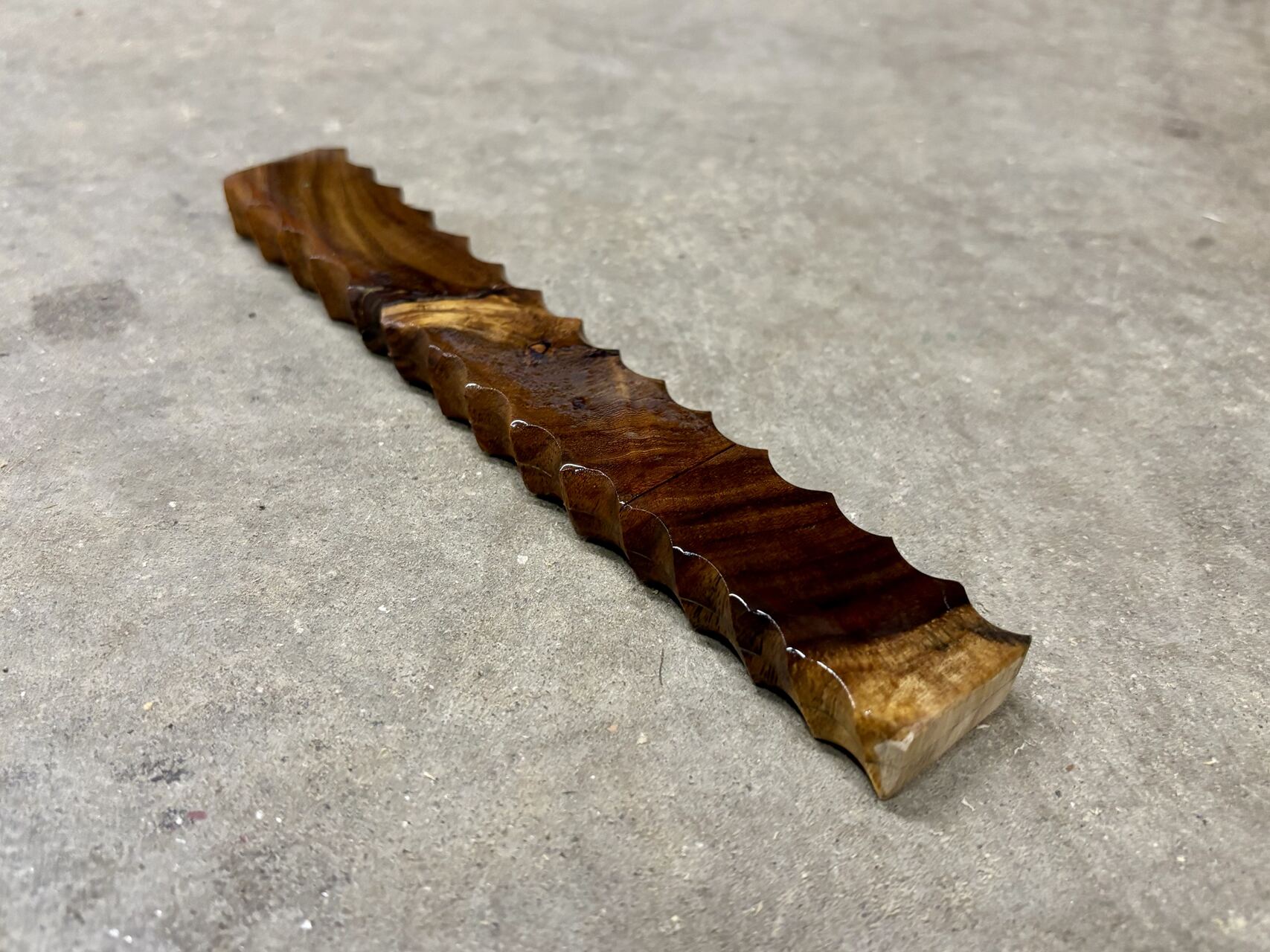
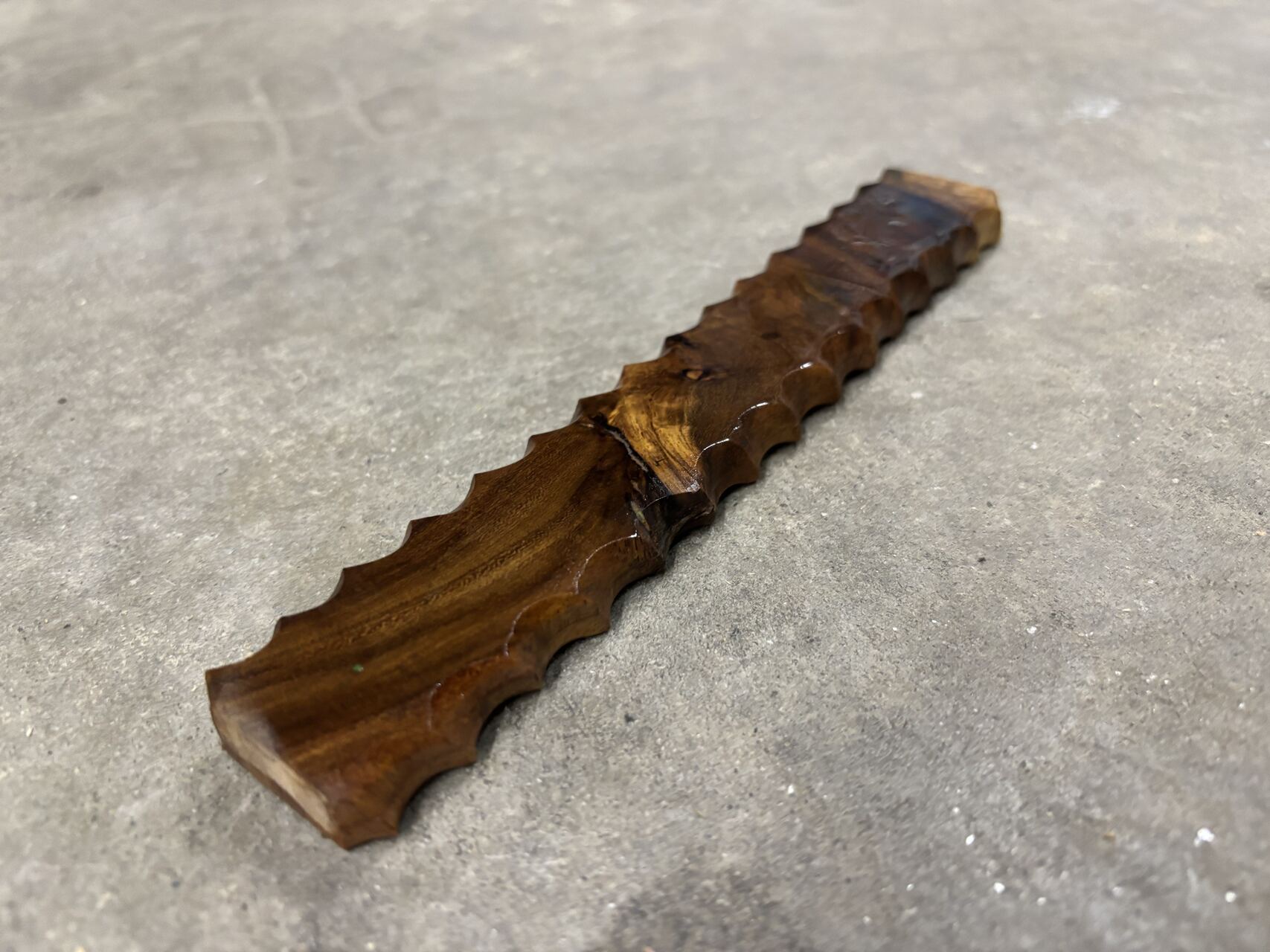
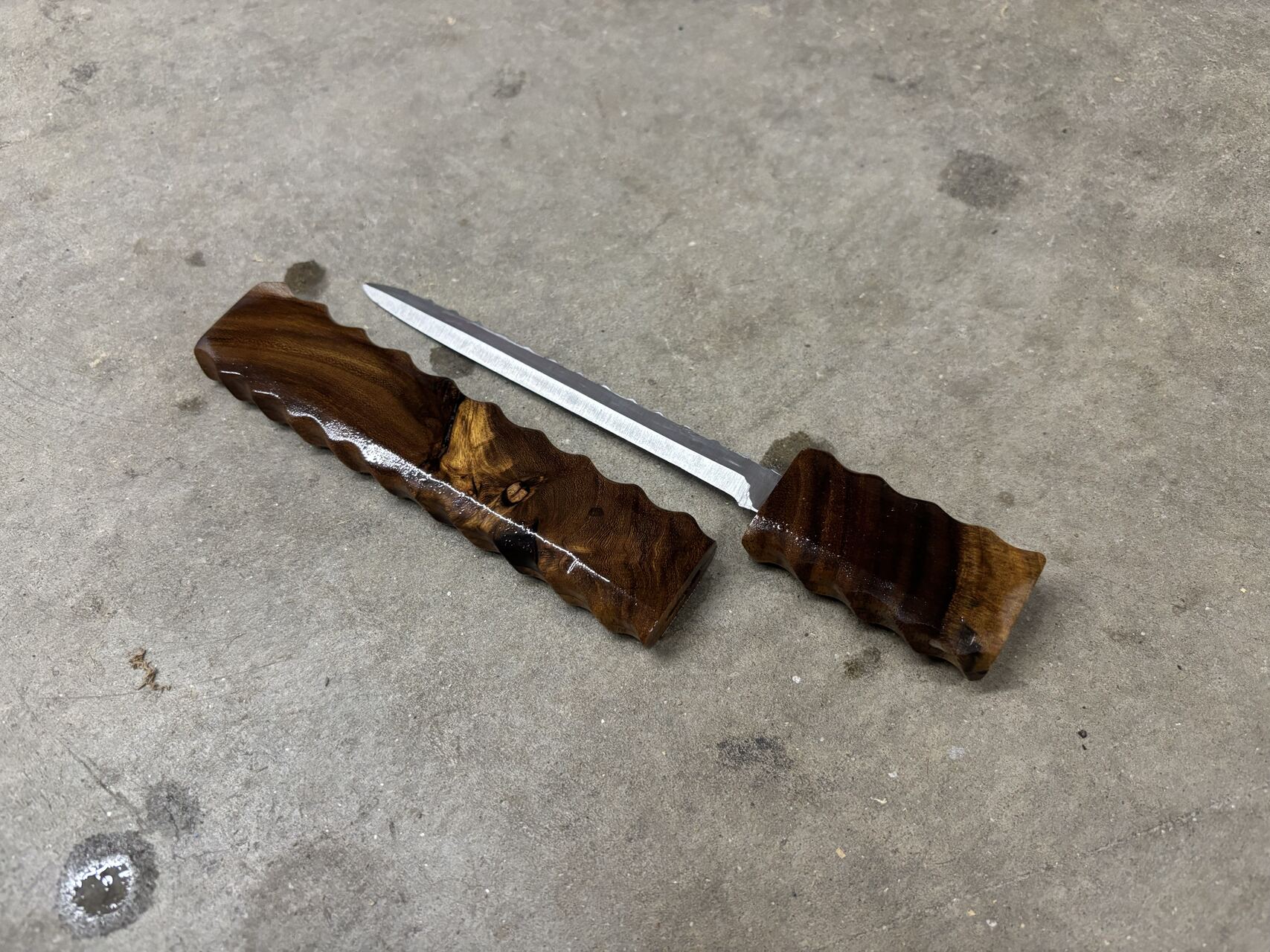
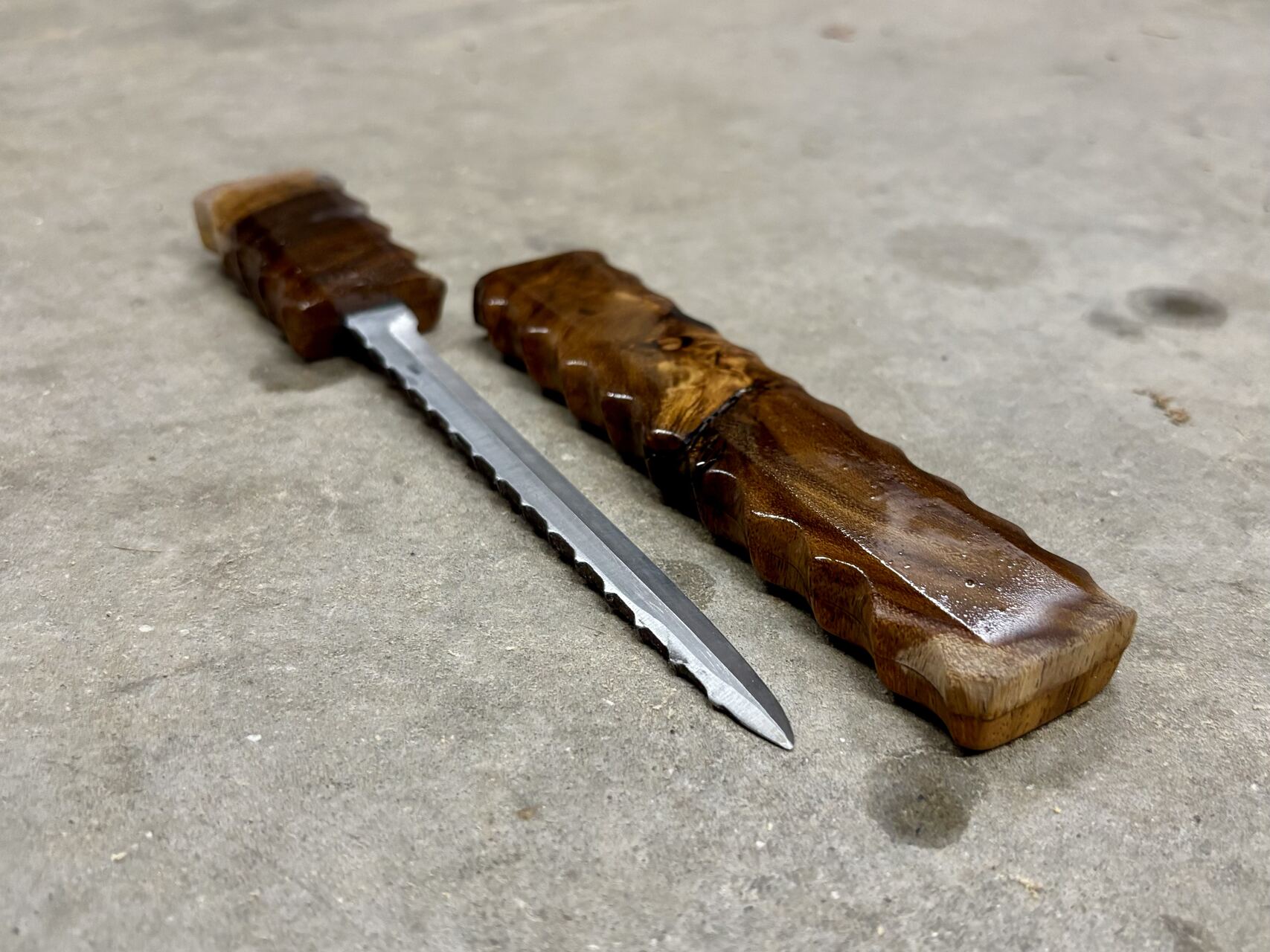
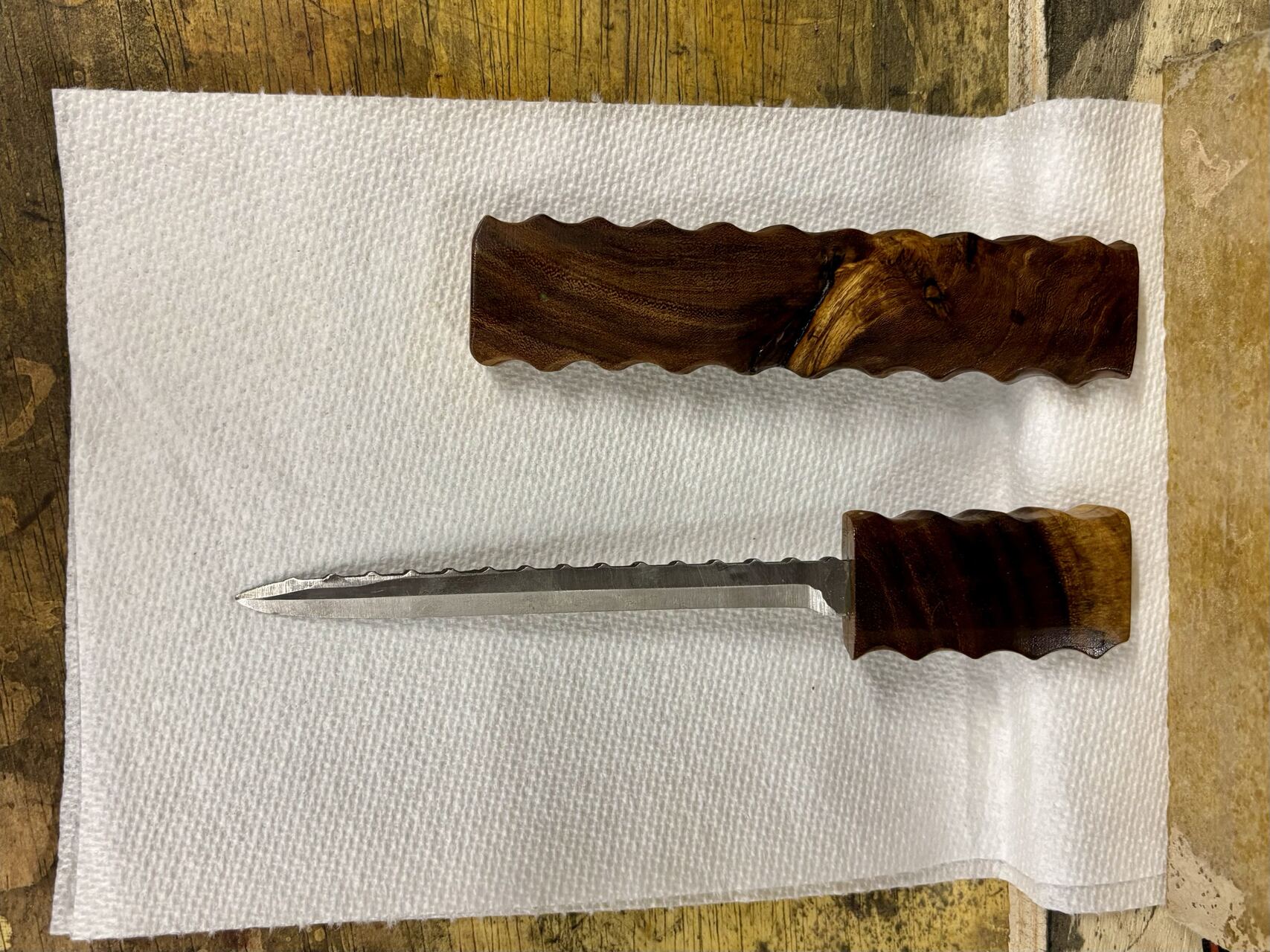
Several coats
Stabilized rosewood is already sealed, but shellac makes the grain glow. I gave the case several coats of Zinsser Bulls Eye shellac, letting each one dry before the next. Thin it, and use more, thinner coats rather than a few heavy ones.
Not using stabilized wood?
Shellac works on plain hardwood too. If you'd rather use an oil finish, these are all great options for a handle:
- Danish oil: the easiest. Wipe it on, let it soak in, wipe off the excess. It finishes in the wood rather than on top of it, which suits something you hold.
- Pure tung oil: very water-resistant once it cures. Many thin coats, wiped off each time, and it takes days to cure.
- Tru-Oil: a gunstock oil that a lot of knife makers use. Thin coats build up to a hand-rubbed gloss.
- Boiled linseed oil: the classic warm look, but it dries slowly and protects the least of the four.
Whichever you choose, keep it out of the pocket. Oil hardens the leather lining just like shellac does.
⚠ Heads up: Oily rags can catch fire
Linseed, tung and Danish oil cure by soaking up oxygen, and that makes heat. A wadded-up rag can get hot enough to catch fire on its own.
Fix: lay used rags flat outside to dry, or drop them in a metal can filled with water.
⚠ Heads up: Keep the finish out of the pocket
Shellac soaking into the leather lining makes it hard, and hard leather doesn't grip.
Fix: finish the outside only, and keep the opening covered or point it down while you work.