
Grinding the Edge with a Knife Jig
A steady angle is everything in a bevel. The jig holds it so your hands don't have to.
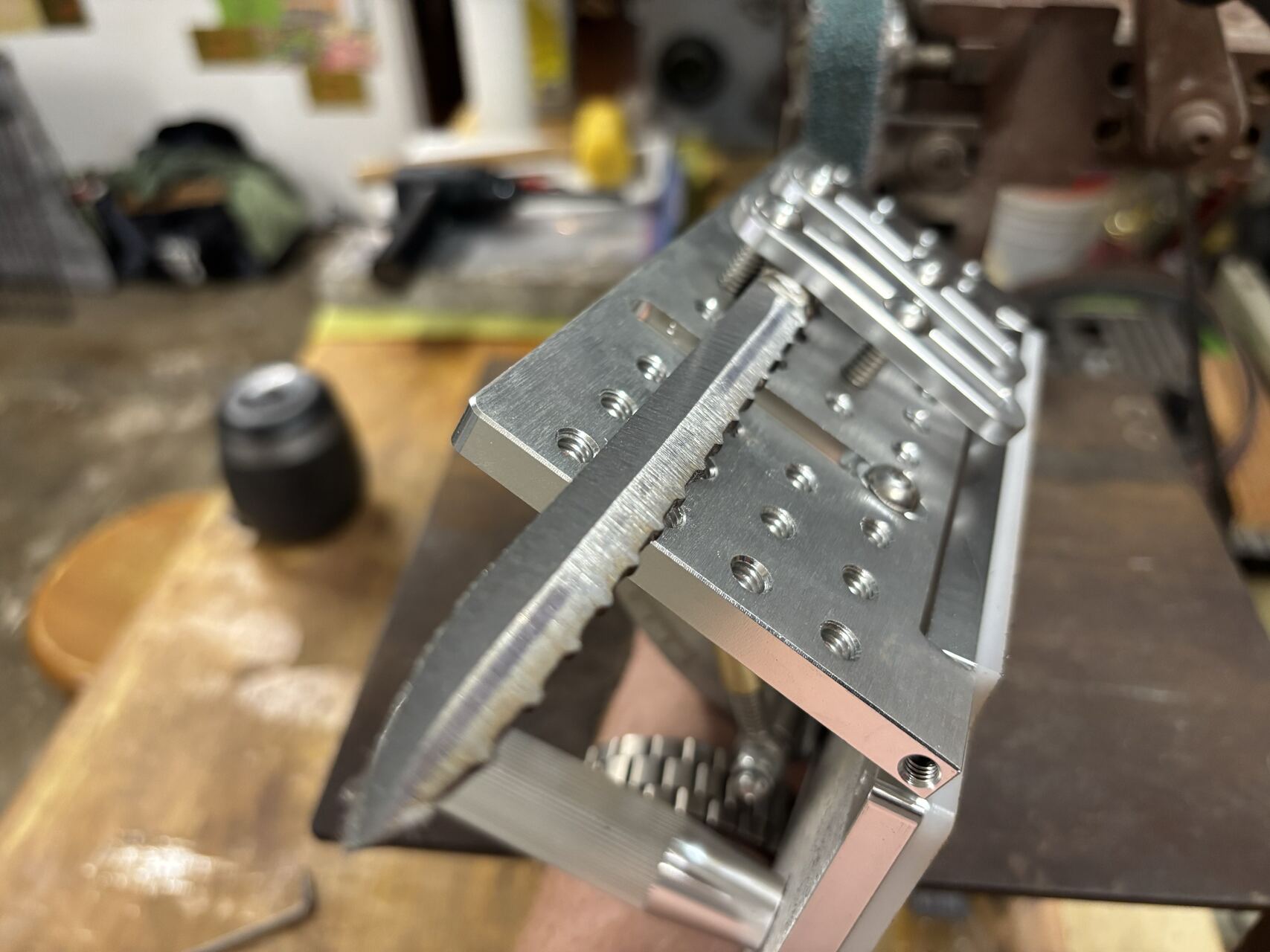
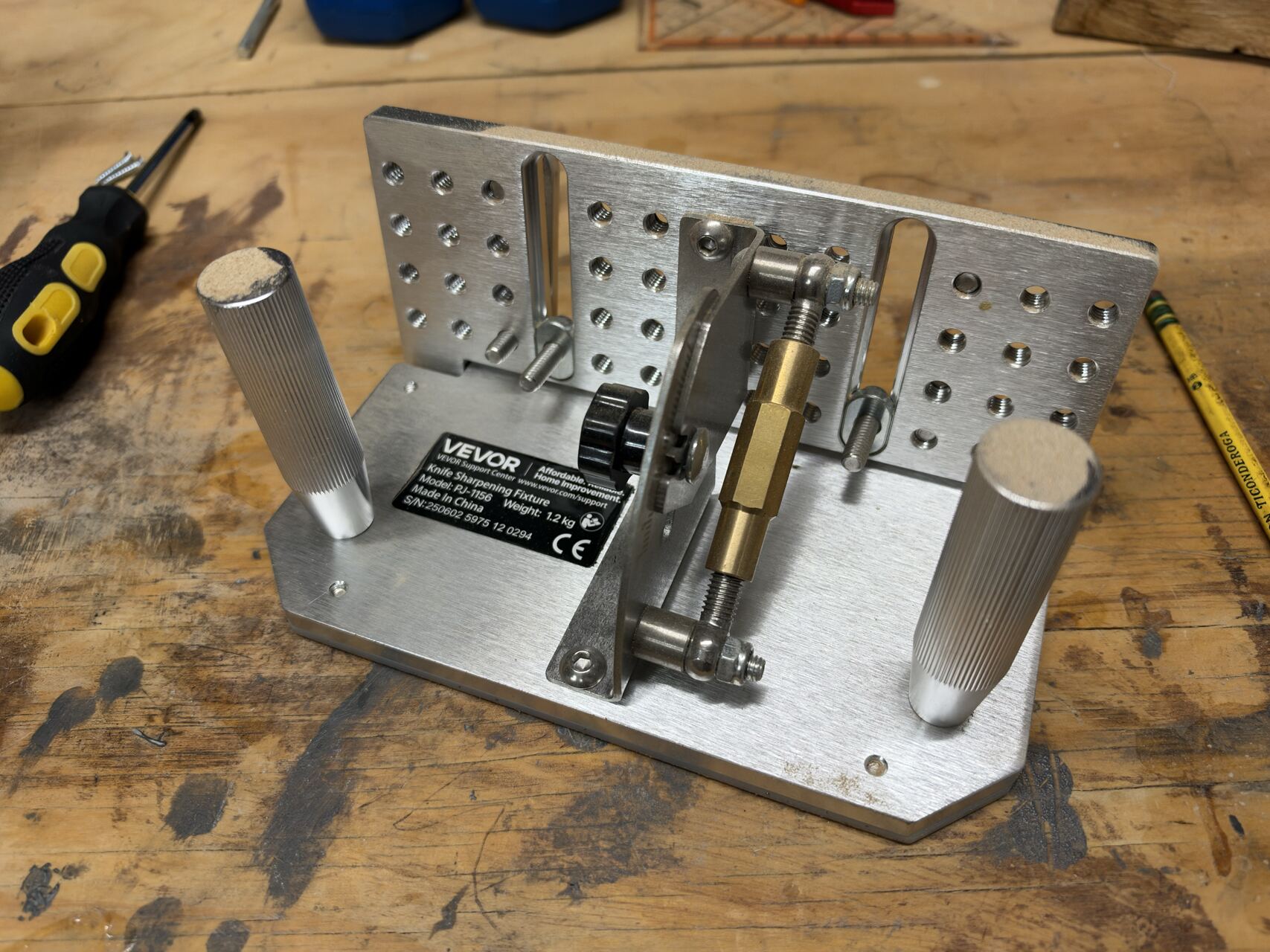
The super cool tool
For the edge I used a VEVOR belt grinder knife jig. It clamps the blade and sets the angle (anywhere from 85° to 115°), then rides on the grinder's table, so the bevel comes out straight and even instead of wandering with your wrists.
Shaping the blade took more time and effort than any other step. It's slow, careful work: light passes, check, quench, repeat. This is the method I'll use for my first real ground blade.
One edge, not two
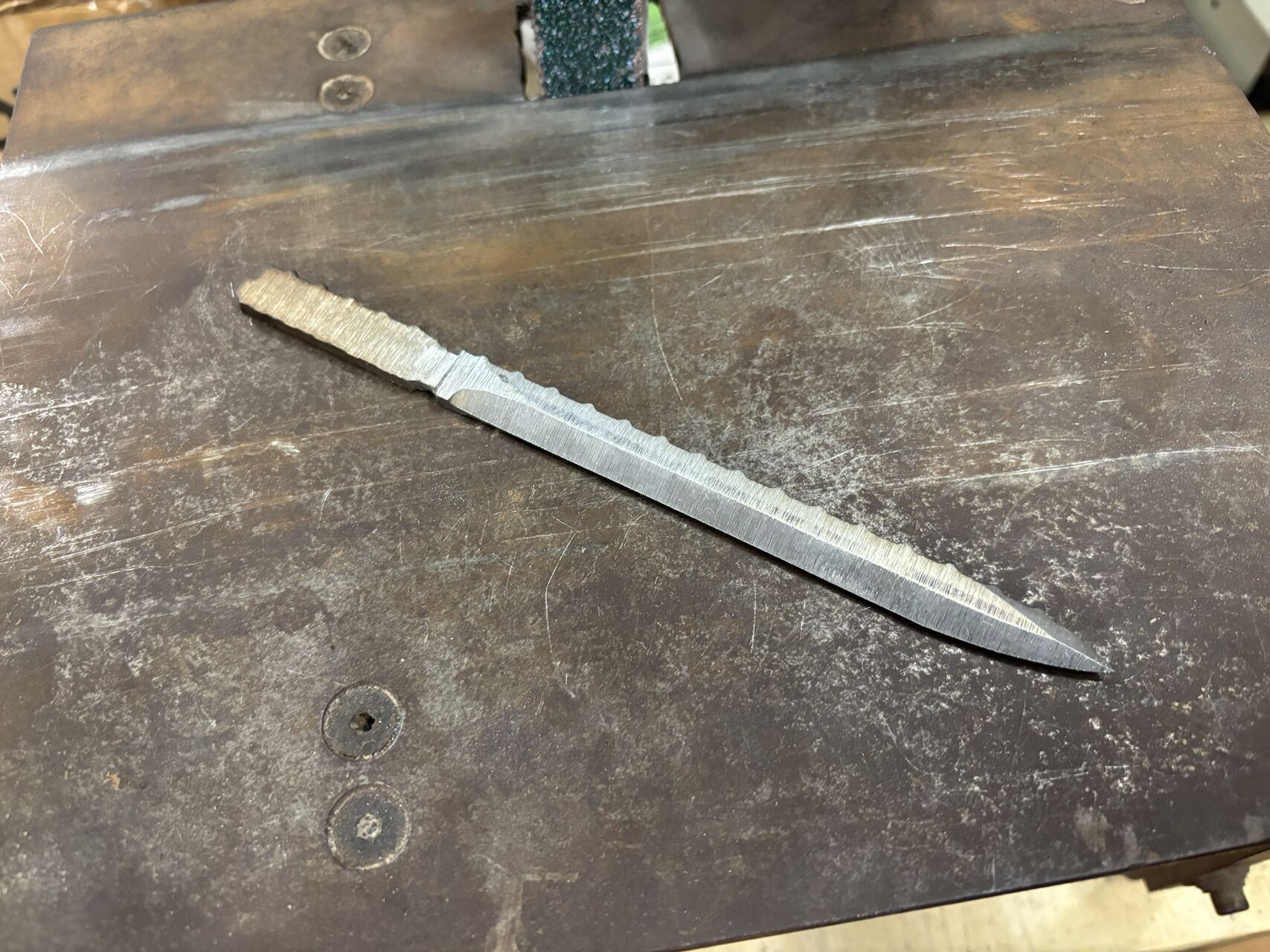
The blade is single-edged. I ground the bevel on one side only and kept the rebar's ridges on the spine as an accent. That way it reads as rebar at a glance, and it's still a real edge where it counts.
Mark the center first
You definitely need to mark the center of the blade before you grind the edge. I didn't. I eyeballed it, and it worked out, but it's the hard way. For future blades I'll use a proper centering scribe to mark the line, then grind both bevels to it.
Rough 'n' tough, not mirror
I sanded the blade, but not to a mirror polish. That probably isn't even possible with rebar, and it isn't the point. Sand just enough to look nice and keep it rough 'n' tough. It's rebar, and it should look like it.
🛠 Tips
- Mark the edge line with a marker before you start, and grind to it.
- Light passes. Let the belt do the work.
- Flip and compare often so the bevel stays even along the whole length.